
L&T Technology Services opened its AI-Native EI Lab for Digital Manufacturing in Bengaluru on October 12. The lab is designed as an experiential space where customers and partners can see how digital twins, AI and physical systems work across the manufacturing lifecycle.
What the lab offers
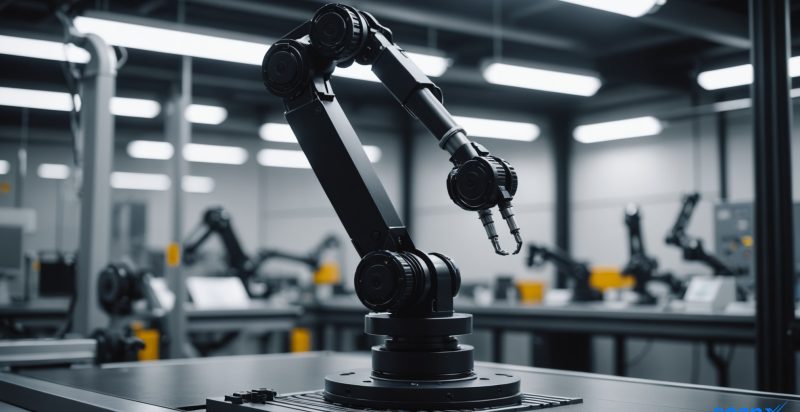
The facility has several capability pillars. Manufacturing Intelligence includes an AI-powered command center, a data fabric with a knowledge graph, and a supply chain control tower supported by AI-driven production planning and multi-plant benchmarking. The AI-Native Factory layer is where robots, cobots, drones, autonomous systems and digital twins work together to execute manufacturing tasks with minimal human intervention.
Why digital twins take centre stage
A digital twin is a virtual replica of a machine, production line or entire plant. The lab runs on NVIDIA Omniverse, Isaac Sim, PhysX, Cosmos, NeMo and OpenUSD-based digital twin workflows. Manufacturers can typically test layouts, robot behaviour and process changes in simulation before touching physical equipment, which reduces risk and downtime.
Visitors can follow a path through live and scenario-based demonstrations, from digital engineering and virtual validation to connected production, intelligent operations and autonomous systems.
What it means for manufacturers
Try before investing: Companies can see Physical AI and digital twins in a working environment before committing capital.
Integrated approach: The lab links planning, simulation and shop-floor execution instead of treating them as separate tools.
Practical focus: LTTS CEO Amit Chadha said the NVIDIA collaboration adds simulation and accelerated computing, while LTTS’s engineering expertise turns them into usable manufacturing solutions.
Market reaction and a caveat
LTTS shares closed at ₹3,309 on October 12, up 1.19% from the previous close. Still, the lab’s capabilities reflect company strategy rather than proof of deployment outcomes. The real test will be how many customers move from demonstrations to live, scaled factory deployments.
For manufacturers weighing digital twin adoption, the lab offers a useful look at where simulation-led, AI-native production is heading.