

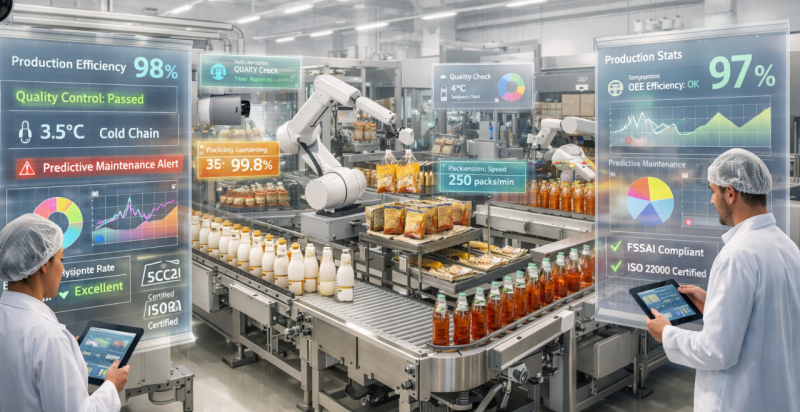
Walk through a modern Indian plant today and the biggest change may be invisible: software that watches machines, parts and people in real time. One market estimate projects India’s AI-in-manufacturing market at about $4.89 billion by 2030, growing at 41.5% a year. NITI Aayog estimates AI could add $85 to 100 billion in value for the sector by 2035.
Faster: Predictive Maintenance Cuts Downtime
Predictive maintenance is among the most widely deployed AI use cases on Indian factory floors. Instead of servicing machines on a fixed calendar, sensor data feeds models that flag failure risk before a breakdown. The need is real: an ABB survey found that 88 per cent of Indian industrial firms face monthly outages. Industry leaders say better maintenance could unlock a 1 per cent GDP opportunity for India.
More Efficient: Quality Control and Planning
Machine-vision cameras can inspect products on the line and spot defects that tired human eyes may miss. AI is also being applied to supply chain optimisation, production scheduling and energy management, helping plants cut waste and meet delivery targets.
Safer: Protecting Workers
Computer-vision systems can monitor shop floors for missing helmets or gloves and alert supervisors when someone enters a hazardous zone. Predictive alerts on equipment also reduce the risk of sudden failures that endanger workers.
The Roadblocks
AI is not a quick fix. Poor data quality in legacy systems is reported as the biggest barrier to scaling AI in Indian plants, ahead of budget or leadership support. Many factories also face skill gaps and integration costs when connecting older machines to new software.
What Factories Should Do Next
- Start small. Pick one high-cost problem, such as a critical machine that fails often.
- Fix the data first. Clean, connected sensor data matters more than the model.
- Train your people. Technicians and supervisors need to trust and use the system.
The Bottom Line
For Indian manufacturers, AI is moving from a pilot project to an operational necessity. Those who start with focused use cases and clean data are likely to see the clearest gains in speed, safety and efficiency


