

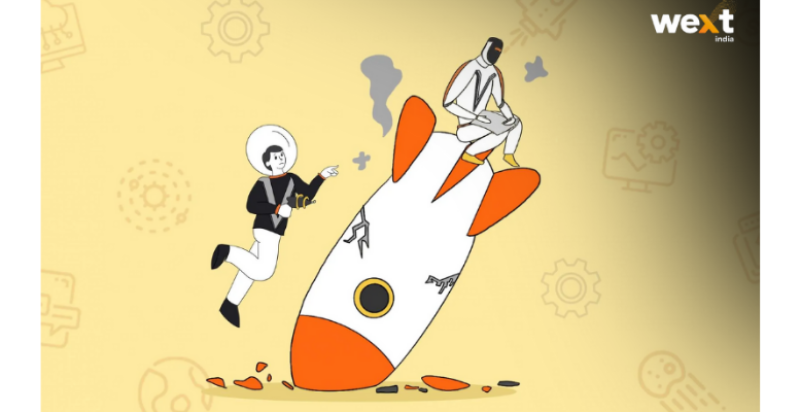
Many Indian startups failed in 2025 due to poor unit economics, regulatory barriers, financial constraints, and strategic missteps. This article explains why companies such as Hike, CrickPe, Good Glamm Group, BluSmart, and others were unable to sustain growth.
Hike
Once a billion-dollar messaging app, Hike turned to gambling to generate revenue, but the 2025 ban on real-money gaming severely harmed the company. The company was eventually forced to close due to expansion difficulties and regulatory pressure.
CrickPe
Despite early success, CrickPe was shut down within two years due to intense competition, stringent regulations, and the 28% GST on real-money gaming.
Good Glamm Group
Once a retail and beauty unicorn, Good Glamm failed under its house-of-brands strategy following quick acquisitions. Due to financial strain brought on by poor integration and high cash burn, lenders took over and started selling its brands by the middle of 2025, signifying a significant collapse.
Blip
Due to a lack of capital, a short runway, and difficulties scaling its go-to-market strategy, Blip, a Bengaluru-based rapid-fashion platform with 30-minute delivery, closed within a year.
BluSmart
In 2025, BluSmart, an early all-electric ride-hailing service, was accused of misappropriating funds and having governance issues. Due to insolvency proceedings triggered by regulatory scrutiny, the platform suspended bookings, affecting drivers and staff.
BeepKart
Despite increasing income, BeepKart experienced narrow profit margins and rising losses, which ultimately led to layoffs and the company’s closure.
Otipy
Otipy increased sales, but a failed Series B investment and significant capital burn caused payment delays, and the company shut down in the middle of 2025.
BharatAgri
Despite great promise, BharatAgri closed after failing to secure new investment, as its expansion was not viable given persistent losses and limited revenue.
Warehouse:
Warehouse.io shut down because a legal dispute with a significant client escalated, demonstrating how contractual disputes and reputational risks may cause startups to fail.
FAQ(Frequently Asked Questions)
1. What caused a large number of Indian companies to fail in 2025?
A large number of Indian companies fail because of the lack of finance, excessive cash burn, poor unit economics, and difficulties with regulations.
2. Were these failures solely due to a lack of funding?
No, ineffective growth strategies, operational problems, and bad governance all contributed significantly.
3. What lessons can entrepreneurs take away from these startup setbacks?
Prioritize long-term profitability, cost containment, and sustainable growth over quick expansion. These are the lessons that entrepreneurs can learn from this startup.