

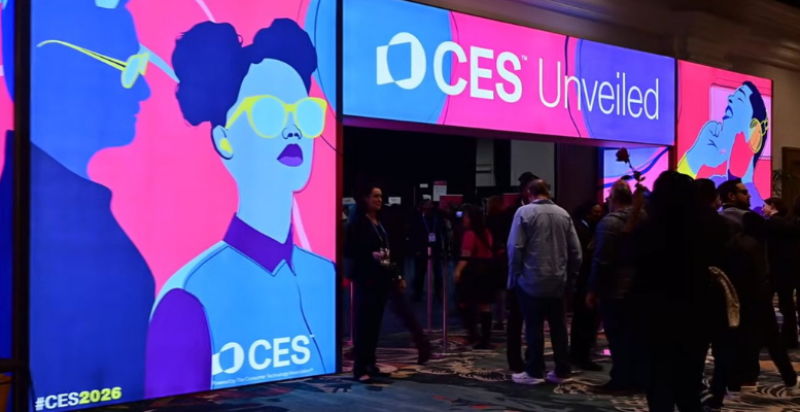
CES 2026 once again proved why it’s called the world’s most important and influential technology event. From coming-generation AI chips to intelligent robots, smart homes, health tech, and AI-driven consumer bias, artificial intelligence dominated every corner of the show. This time, CES wasn’t just about showcasing futuristic ideas; it was about AI getting real, usable, and deeply integrated into everyday life.
What Is CES 2026?
CES( Consumer Electronics Show) is the largest global technology exhibition, held annually and attended by tech giants , startups, originators, policymakers, and media from around the world. It’s the platform where companies unveil their most advanced technologies, set industry trends, and define the future of consumer and enterprise invention.
CES 2026 Focus on
- Artificial Intelligence
- Robotics and automation
- Smart homes and appliances
- Coming- word computing and semiconductors
- Health and heartiness technology
- Connected bias and digital ecosystem
CES 2026: Date, Venue & Key Details
CES 2026 took place in Las Vegas, Nevada, USA, transforming the city into a global tech mecca for an entire week.
Crucial event details
- Event Dates January 6 – January 9, 2026
- Media Days January 4 – January 5, 2026
Main Venues
- Las Vegas Convention Center (LVCC)
- Venetian exhibit
- Eureka Park(inception invention zone)
Thousands of exhibitors showcased how AI is shaping diligence, homes, workplaces, and everyday consumer experiences.
Why AI Was the Biggest Focus at CES 2026
Unlike previous times, where AI was frequently a supporting point, CES 2026 placed AI at the core of invention. The focus shifted from “AI-powered” markers to real-world AI operations that break problems, automate tasks, and enhance mortal capabilities.
Major AI themes included
- AI bedded directly into tackle.
- Physical AI( robots that interact with the real world)
- On- device and edge AI
- AI ecosystems connecting multiple bias
- AI- driven personalization and robotization
Major AI Announcements and Innovations at CES 2026
At CES 2026, AI emerged as the backbone of innovation, with powerful chips enabling advanced AI models to run efficiently at scale. Robotics moved beyond experiments, showcasing real-world applications across industries. AI was integrated into nearly every consumer device, transforming how people interact with technology. Health and wellness solutions highlighted AI’s role in preventive and personalised care. A key trend was the rise of AI-driven ecosystems, where devices work together seamlessly to deliver smarter, connected experiences.
- IKEA introduced its Varmblixt Smart Lamp with a refreshed design at CES 2026, offering modern smart lighting for home spaces. Launched with availability starting April 2026, this smart lamp features color-changing LEDs, smooth dimming control, and remote operation through smart devices. The lamp allows users to adjust hues and brightness levels, setting up mood lighting that fits any occasion, combining IKEA’s classic aesthetic with intelligent functionality.
- HyperX partnered with Neurable to launch the HyperX Neurable Gaming Headset at CES 2026, introducing a next-generation immersive gaming experience. Revealed during the show with a 2026 launch timeline, this headset uses EEG brain-sensor technology to track cognitive states such as focus and stress. The headset is designed for gamers and tech enthusiasts who want not just high-quality audio but also real-time brain-based interaction and mental performance insights.
- At CES 2026, mobility brand Navee unveiled the powerful E-Wagon 4X Electric Utility Cart, now available for purchase. Built for outdoor use, heavy hauling, or adventure gear transport, the 4X comes with a 3000 W motor, offering strong power and performance. It carries up to 1,300 lbs of cargo in its 183-liter storage space and can reach speeds up to 10 mph. The device runs on a 36 V rechargeable battery that fully charges in just a few hours.
- Wellness tech company Withings launched the BodyScan 2 Smart Scale at CES 2026, targeting health-conscious users looking for deep body metrics beyond just weight. Scheduled for release in Summer 2026, the scale measures around 60 health biomarkers, including heart age, visceral fat, muscle-to-fat balance, and more all in under 90 seconds. It also offers early warning notifications for conditions like high blood pressure risk.
- Segway revealed the Myon E-Bike at CES 2026 as part of its expanding line of personal electric mobility solutions. Set for 2026 availability, the Myon features a 500 W rear-hub motor that delivers smooth acceleration and up to 80 miles of range per charge. It also includes GPS tracking, remote locking, and Apple FindMy support, making it ideal for daily urban commuting and city rides.
- Gaming and tech brand Razer introduced Project AVA, a futuristic AI-driven desk companion device, showcased at CES 2026 with a 2026 launch plan. Project AVA projects an interactive 5.5-inch holographic avatar and uses contextual audio and visual sensing to respond intelligently to users. It works with popular AI engines like ChatGPT, Grok, or Claude, making it a flexible assistant for productivity, planning, or entertainment tasks.
- ASUS unveiled the Zenbook A16 at CES 2026 as one of the first laptops powered by the advanced Snapdragon X2 Elite Extreme chipset, aiming to balance high performance with portability. Expected to launch in 2026, the laptop features a stunning 16-inch 3K OLED display with a 120 Hz refresh rate, making it great for creative work, streaming, and multitasking. Weighing around 2.65 lbs, this Zenbook delivers premium performance in a lightweight chassis, perfect for professionals and creators who need power on the go.
- Motorola unveiled the Razr Fold, a book-style foldable smartphone aimed at premium users. It features an 8.1-inch inner display and a 6.6-inch outer screen, allowing full functionality even when folded. Motorola has not announced an official launch date yet, but a 2026 rollout is expected. A major highlight is stylus support, making it suitable for productivity and creative use. The phone includes five rear cameras, led by a 50MP primary sensor.
- IKEA showcased its Varmblixt smart LED lighting, including a donut-shaped ambient lamp designed for modern interiors. Expected to launch globally in 2026, with region-wise availability. The light supports adjustable brightness and colour tones and can be wall-mounted or used as a table lamp.
- Lenovo impressed audiences with the Legion Pro Rollable, a gaming laptop featuring a rollable display that expands from 16 inches to 23.8 inches. Currently a concept, with Lenovo indicating a late-2026 launch possibility. The laptop can be configured with an Intel Core Ultra 9 processor and NVIDIA RTX 5090 GPU, targeting high-end gamers and creators.
- L’Oréal introduced the Light Straight + Multi-Styler, a beauty device that uses infrared light technology instead of extreme heat. Planned for commercial release in 2026, exact date unannounced. This helps straighten hair faster while reducing damage. The company claims it works three times faster than traditional straighteners and improves hair smoothness.
- Roborock’s Saros Rover is a next-generation robot vacuum with mechanical legs that allow it to climb stairs and clean multi-level homes. Still in development, with pricing and launch timeline yet to be confirmed. It uses AI-based navigation, obstacle detection, and adaptive movement to handle uneven surfaces.
- NuraLogix showcased its AI-powered Longevity Mirror, which uses a camera and facial blood-flow analysis to measure health indicators like heart rate, blood pressure, and biological age without wearables. Expected to launch in mid to late 2026. The device connects to software dashboards and requires a subscription.
- The Sunbooster is a wellness device that emits near-infrared light to mimic sunlight exposure while working indoors. Expected to be available during 2026. It is designed to support mood, energy, and overall well-being.
- Dreame introduced the Leaptic Cube, a compact modular action camera capable of recording up to 8K video. Expected to ship in mid-2026. Its cube-shaped design supports attachable modules for expanded functionality, making it ideal for travel and adventure content creators.
- The X5 Alteron is a fully modular gaming controller expected to be announced in early 2026 that allows users to customize buttons, grips, and layouts. It supports Android, iOS, tablets, Nintendo Switch, and Bluetooth-enabled PCs.
- Tensor showcased a Level-4 autonomous robocar, capable of operating without constant human input. Still in the testing and development phase, with no confirmed commercial launch date. The vehicle demonstrated hands-free navigation and advanced autonomous driving capabilities.
- Razer showcased Project Motoko, an AI-powered gaming headset designed to work as a personal AI assistant. This is currently a concept product, with Razer indicating a potential commercial launch later in 2026, though no exact date has been announced. The headset supports conversational AI models and was demonstrated using ChatGPT. The headset features built-in microphones, speakers, and AI processing capabilities.
- Project Ava is a holographic AI desk companion displayed inside a transparent glass tube. The device remains in the prototype stage, with no confirmed launch date, though it is expected to evolve further in late 2026 or beyond. It includes a built-in camera and speakers and projects a 3D animated AI character that interacts with users for productivity tasks, scheduling, gaming strategies, and daily assistance.
- Roborock introduced the Saros Rover, a next-generation robot vacuum equipped with mechanical legs that allow it to climb stairs, clean uneven surfaces, and move between different floor levels. The Saros Rover is currently in development, and pricing and launch timelines have not yet been announced. The vacuum combines AI-based navigation, obstacle detection, and adaptive movement to clean complex home layouts.The Saros Rover is currently in development, and pricing and launch timelines have not yet been announced.
- Oshkosh Corporation showcased autonomous robots designed specifically for airport operations. The technology is in the pilot testing phase, with real-world trials expected at major international airports over the next few years, rather than a consumer launch. These robots can perform tasks such as baggage handling, aircraft servicing, cleaning, and ground logistics.
- Withings unveiled the Body Scan 2, an advanced smart health scale priced at around $600. Withings confirmed that Body Scan 2 will be commercially available in 2026, It can measure nearly 60 health indicators in 90 seconds, including heart health, vascular age, nerve activity, and metabolism, using both foot and hand sensors. The device connects to a mobile app and requires a subscription for advanced health insights.
- Samsung displayed a massive 130-inch Micro RGB television, showcasing ultra-high brightness, superior colour accuracy, and improved contrast performance. This model is a technology showcase, with limited commercial availability expected in late 2026 or later, mainly for premium buyers. The TV is aimed at luxury home entertainment setups and commercial installations.
- LG introduced its latest OLED evo TVs and Gallery-style displays that double as wall art. LG confirmed that these TV models will begin launching globally in 2026, with region-wise availability. These TVs support wireless connectivity via LG’s Zero Connect Box, removing visible cables while delivering lossless 4K visuals and high-quality audio. The Gallery TV lineup is available in multiple sizes and blends performance with aesthetic design.
- Siemens and NVIDIA announced a collaboration with Commonwealth Fusion Systems to apply AI in fusion energy development. This is a research and industrial collaboration, not a consumer product, with ongoing development and long-term deployment goals.
- Nvidia unveiled its next-generation Vera Rubin AI Computing Platform at CES 2026 on January 5, announced by CEO Jensen Huang. The platform integrates the Vera CPU, Rubin GPU, NVLink, and BlueField DPUs into a single architecture, enabling efficient operation of trillion-parameter AI models. It supports generative AI, large language models, and foundation models, while being optimized for both AI training and real-time inference.
- Intel unveiled its Panther Lake AI processors, aimed at laptops and consumer devices, delivering improved AI acceleration and performance per watt. Intel officially unveiled Panther Lake AI processors in January 2026 at CES 2026. This processors feature an upgraded Intel AI accelerator for on-device AI tasks. This AI processors enable advanced AI features such as image generation, voice processing, and language translation. This AI processors improve battery life.
- AMD showcased its latest Ryzen AI processors, extending AI computing capabilities into mainstream consumer PCs were officially unveiled by AMD on January 8, 2026, at CES 2026 in Las Vegas. Ryzen AI processors feature a built-in Neural Processing Unit for on-device AI workloads. Ryzen AI processors support generative AI, large language models, Ryzen AI processors deliver improved performance per watt for better energy efficiency.
- Qualcomm revealed the Dragonwing IQ Series, a processor platform optimized for robotics, edge AI, and autonomous machines. The Dragonwing IQ Series was officially unveiled by Qualcomm on January 6, 2026, at CES 2026 in Las Vegas. Qualcomm’s advanced processor platform is designed specifically for robotics and physical AI systems. This series is built to power autonomous robots and intelligent edge devices and it is also designed for energy-efficient operation in always-on robotic environments.
- AI-powered home robots were officially showcased on January 6, 2026, at CES 2026 in Las Vegas, marking the opening day of the event. This robots are designed to assist users with daily household tasks using artificial intelligence and automation. AI-powered home robots integrate sensors and cameras for real-time environment awareness. AI-powered home robots represent a major step toward Physical AI, where machines interact intelligently with the real world.
- Service robots were prominently showcased on January 6, 2026, at CES 2026 in Las Vegas. Service robots designed for hospitality, healthcare, and client service surroundings. Service robots feature advanced computer vision for facial recognition, object detection, and environment mapping. Service robots support natural language processing for smooth interaction with customers and staff.
- Hyundai and Boston Dynamics collaborated to present Atlas on January 5, 2026, at CES 2026 in Las Vegas. Hyundai and Boston Dynamics collaborated to present Atlas, a sophisticated humanoid robot with enhanced movement, balance, and autonomous capabilities. The humanoid robot is designed to assist humans in industrial, manufacturing, and complex operational environments. The Atlas humanoid robot features 56 degrees of freedom for highly flexible, human-like movement.
- LG CLOiD home robot was first unveiled on January 5, 2026, at CES 2026 in Las Vegas. LG Electronics unveiled CLOiD, a home robot with AI capabilities that can help with routine domestic chores and engage with consumers in a natural way. The LG CLOiD home robot is designed to showcase LG’s “Zero Labor Home” vision, where AI and robotics handle everyday household tasks. LG CLOiD home robot performs and coordinates routine chores.
- Nvidia highlighted the emergence of Physical AI on January 5, 2026, at its keynote presentation during CES 2026 in Las Vegas. Physical AI as a key strategic focus alongside its Vera Rubin AI computing platform. Physical AI to support intelligent machines such as robots, autonomous vehicles, and smart systems. Physical AI to advance autonomous navigation, manipulation, and environment interaction.
- Smart refrigerators were showcased on January 6, 2026, at CES 2026 in Las Vegas. Smart refrigerators include Samsung’s upgraded Bespoke AI Family Hub series featuring AI Vision for enhanced food recognition. Smart refrigerators support advanced food inventory tracking . smart refrigerator was unveiled with a built‑in barcode scanner that automatically adds scanned grocery items to digital shopping lists. smart refrigerator features an 8‑inch touchscreen display for recipes, weather, and smart home integration.
- AI-enabled washing machines were showcased on January 6, 2026, at CES 2026 in Las Vegas.AI-enabled washing machines and kitchen appliances that optimize energy use and performance. AI-enabled washing machines incorporate a Super Speed cycle with high-pressure Speed Spray for improved detergent penetration and rinsing. AI-enabled washing machines have an Auto Open Door+ feature that automatically opens the door after cycles and activates air circulation to reduce odors.
- AI-enabled kitchen appliances were also highlighted on January 6, 2026 at CES 2026, showcasing smarter kitchen automation. AI-enabled kitchen appliances include new over-the-range microwaves and slide-in ranges with improved dual vent systems and smarter automation. AI-enabled kitchen appliances feature AI Vision systems that recognize fresh and processed foods automatically for easier meal planning. It also include specialty units like AI-enabled wine cellars with label recognition and smart tracking of bottle placement.
- AI‑powered home systems were showcased on January 6, 2026, at CES 2026 in Las Vegas. AI‑powered home systems are designed to automatically adjust lighting, temperature, and air quality based on user habits. AI‑powered home systems include intelligent lighting control that adapts brightness. AI‑powered home systems use sensors and machine learning to detect occupancy and adjust systems for energy savings. AI‑powered home systems support voice commands and natural language interaction for easy control.
- Samsung expanded its Bespoke AI ecosystem on January 6, 2026 at CES 2026 in Las Vegas, showcasing next-generation AI-connected home living. Samsung expanded its Bespoke AI ecosystem to include upgraded AI‑enhanced home appliances that work together seamlessly across the home. It includes AI Laundry Combo with AI Wash+, Booster Heat Exchanger, Super Speed cycle, and Auto Open Door+ features.
- AI-powered kitchen appliances were showcased on January 6, 2026, at CES 2026 in Las Vegas. AI-powered kitchen appliances feature AI Vision to automatically recognize a wide range of food items without manual input. AI-powered kitchen appliances support voice-activated commands for hands-free operation. AI-powered kitchen appliances provide features like “What’s for Today?” recipe suggestions and weekly food insight reports. AI-powered kitchen appliances include AI-enabled wine cellars that track bottle placement and recognize labels.
- AI‑enhanced TVs were showcased on January 6, 2026, at CES 2026 in Las Vegas. AI‑enhanced TVs feature large-screen Micro RGB and advanced display models with AI-driven picture enhancements. AI‑enhanced TVs include AI Companion features that act as an intelligent entertainment hub. AI‑enhanced TVs support AI modes like AI Soccer Mode Pro for enhanced gaming and sports viewing.
- Smartphones with advanced AI photography were showcased on January 6, 2026, at CES 2026 in Las Vegas. Smartphones with advanced AI photography feature real‑time AI scene recognition for optimized photo settings. It supports live AI image editing and enhancement directly in the camera app. It uses multi‑lens AI fusion to combine data from several cameras for richer detail. This smartphone’s feature AI auto‑framing and subject tracking for better video content.
- Samsung AI-powered TVs were unveiled on January 6, 2026, at CES 2026 in Las Vegas. Samsung AI-powered TVs feature large-screen Micro RGB and QLED displays with AI-driven picture enhancements. Samsung AI-powered TVs use AI engines for precise color control, contrast optimization, and vivid visuals. Samsung AI-powered TVs include AI Companion features for intelligent content recommendations and viewing assistance.
- AI-powered wearable devices were showcased on January 6, 2026, at CES 2026 in Las Vegas. AI-powered wearable devices track biometric data and provide real-time health and fitness coaching. AI-powered wearable devices support voice-led interaction and hands-free control for logging meals, symptoms, and emotions. AI-powered wearable devices use advanced sensors and motion tracking for insights on stress, sleep, and recovery. AI-powered wearable devices feature on-device AI processing to reduce latency and protect privacy.
- AI-powered health monitoring tools were showcased on January 6, 2026, at CES 2026 in Las Vegas. AI-powered health monitoring tools continuously monitor key biometric signals like heart rate, sleep, and stress patterns. AI-powered health monitoring tools provide personalized health coaching for exercise, sleep, and chronic disease prevention.
- Central AI assistants for managing homes were showcased on January 6, 2026, at CES 2026 in Las Vegas. Central AI assistants for managing homes provide unified control of lighting, temperature, security, and appliances from a single interface. Central AI assistants for managing homes use voice interaction and natural language commands for hands‑free operation. Central AI assistants for managing homes learn user routines and preferences to automate daily tasks.
- Cross-device intelligence was showcased on January 6, 2026, at CES 2026 in Las Vegas. Cross-device intelligence allows multiple smart devices to communicate and coordinate seamlessly across home, office, and personal spaces. Cross-device intelligence adapts to user behavior, automatically syncing preferences, routines, and settings across device. Cross-device intelligence leverages edge AI to reduce latency and maintain privacy without relying solely on cloud computing.
What CES 2026 Means for the Future?
CES 2026 wasn’t just about product launches it was about direction.
The event showed how AI is getting
- More accessible
- More practical
- further bedded into diurnal life
From homes and healthcare to entertainment and assiduity, AI is now shaping how technology thinks, learns, and interacts.
FAQ (Frequently Asked Questions)
1. Why was AI the biggest highlight at CES 2026?
AI dominated CES 2026 because it is now deeply integrated into hardware, not just software. From AI chips and robots to smart homes and appliances, companies showcased how AI is becoming a core part of everyday technology.
2. What is “Physical AI” showcased at CES 2026?
Physical AI refers to robots and machines that can see, think, and act in the real world. At CES 2026, companies presented service robots, industrial robots, and humanoid machines designed for real-life use, not just demonstrations.
3. How will AI improve smart homes after CES 2026?
AI-powered smart homes will become more personalized and intuitive. Appliances will learn user habits, manage energy efficiently, recognize food items, and respond to natural voice commands for a smoother daily experience.
4. Will AI from CES 2026 impact regular consumers or only enterprises?
AI innovations from CES 2026 will impact both. While enterprises benefit from advanced AI chips and platforms, consumers will experience AI through smarter TVs, appliances, wearables, robots, and connected home devices.