

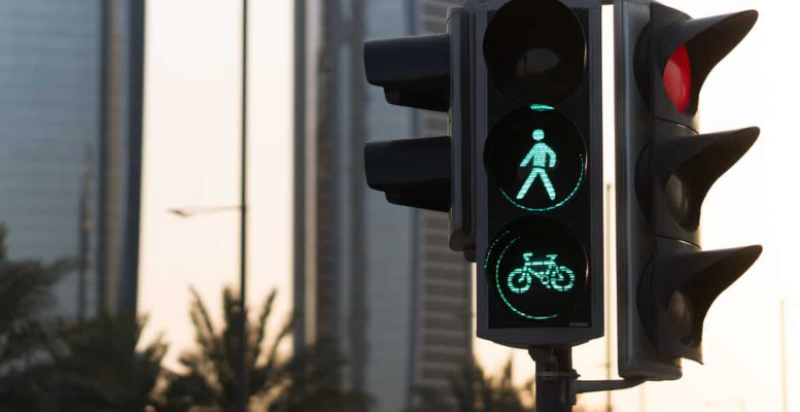
Visakhapatnam is preparing for a major urban tech upgrade as it becomes the first Indian city to deploy a fully integrated AI Driven Traffic Management System. The initiative, revealed by City Police Commissioner Shankhabrata Bagchi in a recent interview, aims to replace outdated manual processes with intelligent, data-powered traffic governance.
This landmark shift positions Vizag as a live testbed for next-generation mobility solutions—aligning with India’s broader vision of using AI innovation in India to improve public infrastructure.
How the New System Will Transform Daily Commuting
Instead of pre-set or manually adjusted signals, the upcoming platform will make decisions based on what’s actually happening on the road at that moment. Key capabilities include:
-
Live vehicle-density detection
-
Automated signal adjustments without human inputs
-
AI-flagged traffic violations
-
Early identification of choke points
-
Smart routing support for emergency vehicles
A study by the International Transport Forum notes that cities applying AI-driven traffic intelligence can reduce intersection delays by up to 30%.
Why Vizag’s Leap Is a Big Deal for Indian Cities
This isn’t just a tech upgrade – it’s a governance shift. Vizag’s AI rollout is expected to deliver:
-
Faster decision cycles using real-time analytics
-
Lower congestion and smoother peak-hour movement
-
Improved enforcement accuracy with fewer manual errors
-
Foundational data for long-term city planning
-
A scalable blueprint for other growing metros
With traffic volumes rising across the country, Vizag’s early adoption showcases how AI can be used not only for enterprise but also for public good – reinforcing confidence in AI applications in business and civic systems alike.
FAQ (Frequently Asked Questions)
1. What is an AI-driven traffic management system?
An AI-driven traffic management system uses machine learning and real-time data to monitor road conditions, control traffic signals, predict congestion, and automatically optimize traffic flow across a city. It helps authorities manage traffic more intelligently compared to fixed-timing signal systems.
2. How does AI help reduce traffic congestion?
AI reduces congestion by analyzing live traffic patterns, adjusting signal timings dynamically, detecting incidents instantly, and suggesting alternate routes to drivers. This results in smoother intersections, fewer bottlenecks, faster travel times, and improved road efficiency.
3. What data does the system collect?
The system collects data from cameras, sensors, GPS devices, traffic signals, vehicle counts, speed patterns, and even weather information—allowing AI models to understand road conditions and make real-time traffic decisions.